
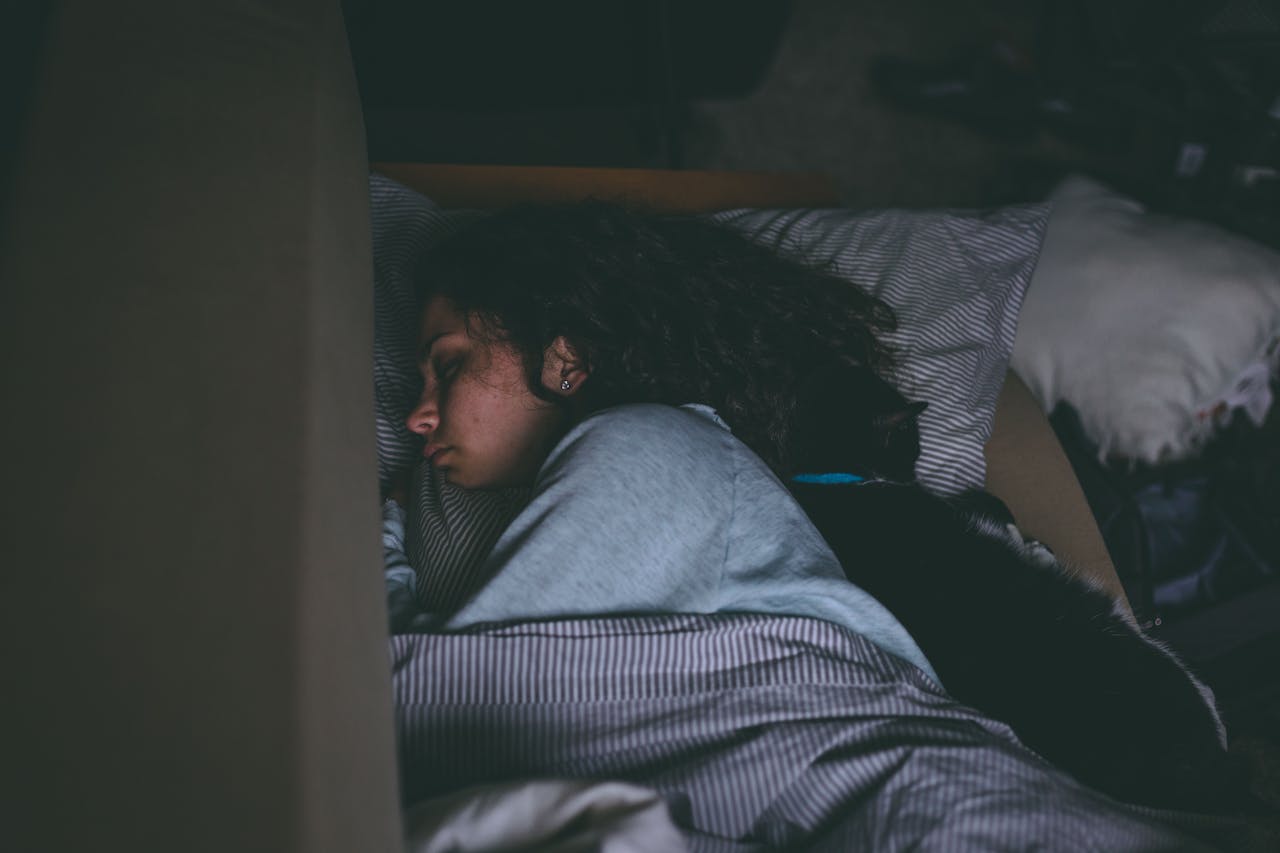
Do you ever find yourself lying in bed, ready to go to sleep, staring at the ceiling while your mind jumps from one worry to the next? If so, you’re not alone.
Nighttime anxiety is a very common phenomenon that works its way out just as you’re starting to wind down for the evening. The quiet of the night and fewer distractions give anxious thoughts the perfect opportunity to emerge. Before you know it, small concerns become major issues. Your brain gets a jolt, and sleep begins to feel like an impossible feat.
There are practical strategies that you can implement to help calm your mind, but what if your solution isn’t about forcing yourself to relax? What if the key to reclaiming your restful nights revolves around reconnecting with your body and allowing yourself to process the anxiety?
Understanding Why Anxiety Shows Up at Night
 Throughout the day, we constantly juggle multiple tasks at once. We’re moving around the office, thinking about the projects we need to accomplish today, and performing the actual work. The body naturally holds on to tension, but we’re usually too busy and preoccupied to notice.
At night, everything changes. We finally slow down, and all that stored energy can come bursting to the front with nowhere to go.
Nighttime anxiety is the body’s way of trying to communicate with you. Tension in the chest, racing thoughts, and restlessness are all signals that something needs to be released.
A Somatic Approach to Nighttime Calm
Traditional coping strategies certainly have their appropriate time and place, but they may also be masking your symptoms for a short time. Instead, try turning to more body-based approaches that aim to address the root cause.
Tune In to What You’re Feeling
Rather than fight symptoms and sensations, become curious about them. Questions you can ask yourself to help tune in further include:
- Where do I feel anxiety in my body?
- Am I holding tension in my jaw?
- Do I have knots in my stomach?
- Is there tightness in my chest?
Place your hand on that area and start breathing into it. Simply acknowledging where your tension is can begin to shift energy positively.
Shake It Out
Before bed, designate some time to literally shake it out. Stand up and shake your hands, arms, legs, and your whole body. Feel free to change your breathing pattern or let out any sounds that naturally flow. Through this simple movement, you’re letting your nervous system release the stress that it’s been holding.
Breathe with Intention
Your breath is one of the most powerful tools you have at your disposal. Anytime anxiety flares up, it can affect your natural breathing pattern. To combat that, try focusing conscious effort on deep breathing techniques.
As you breathe in, focus on sending that breath to areas that are holding tension. On your exhales, try to go slowly to signal to your nervous system that it’s safe to relax.
Welcome the Anxiety
Sometimes, anxiety does serve as a protection mechanism to alert you that you need to be cautious. Instead of instantly pushing it away, try accepting it. Being compassionate toward yourself can help you understand what’s going on underneath the anxiety.
Creating Space for Healing
Nighttime anxiety doesn’t necessarily indicate something is wrong or needs to be “fixed.” Anxiety is a part of your body’s wisdom and may be asking you to slow down. Use this opportunity to reconnect with yourself.
This process of learning to be with your emotions, rather than avoiding or controlling them, is at the heart of true healing. It’s about unlearning the patterns that no longer serve you and returning to your innate wholeness.
If nighttime anxiety is affecting your quality of life, working with an anxiety therapist who understands somatic and holistic approaches can make a profound difference. Get in touch to learn more. We’re here when you’re ready!
CONTACT US